
GripMetal® is on a mission to enhance structural performance of mass timber and wood based construction by transferring the benefits of metal into wood.
Engineering the future

The engineer team from Salas O’Brien conducting beam breakage tests at the Toronto Metropolitan University testing facility utilizing GripMetal on standard dimensional lumber during phase 1.
Glulam
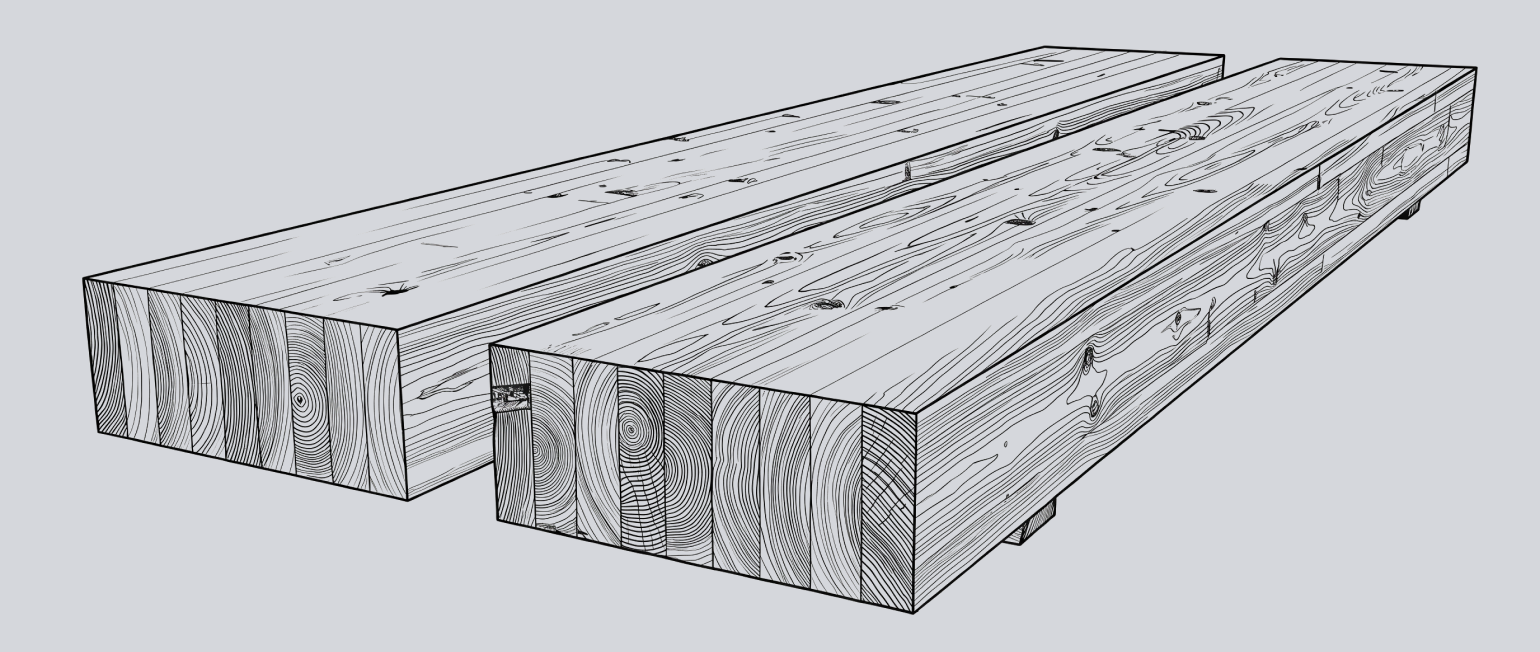
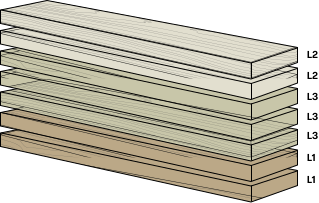
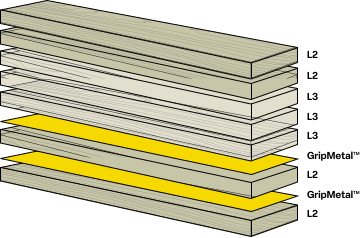
NUCAP Industries, in collaboration with structural engineering firm Salas O'Brien and Toronto Metropolitan University, has completed Phase 1 structural testing of GripMetal embedded within glulam lamstock. Beams were manufactured by production partner QB Corp, engineered by Salas O'Brien, and broken under laboratory conditions at TMU using four-point bending protocols across multiple reinforcement configurations. The aluminum configuration with two layers of GripMetal embedded within the lamination stack, excluding the bottom layer -- produced a 17.13% increase in peak failure load versus an unreinforced control beam of equal dimensions. Critically, that result was achieved using L2 and L3 lamstock in place of the L1 premium fiber used in the control, confirming that GripMetal can unlock lower-grade fiber without sacrificing structural performance.
Nail Laminated Timber
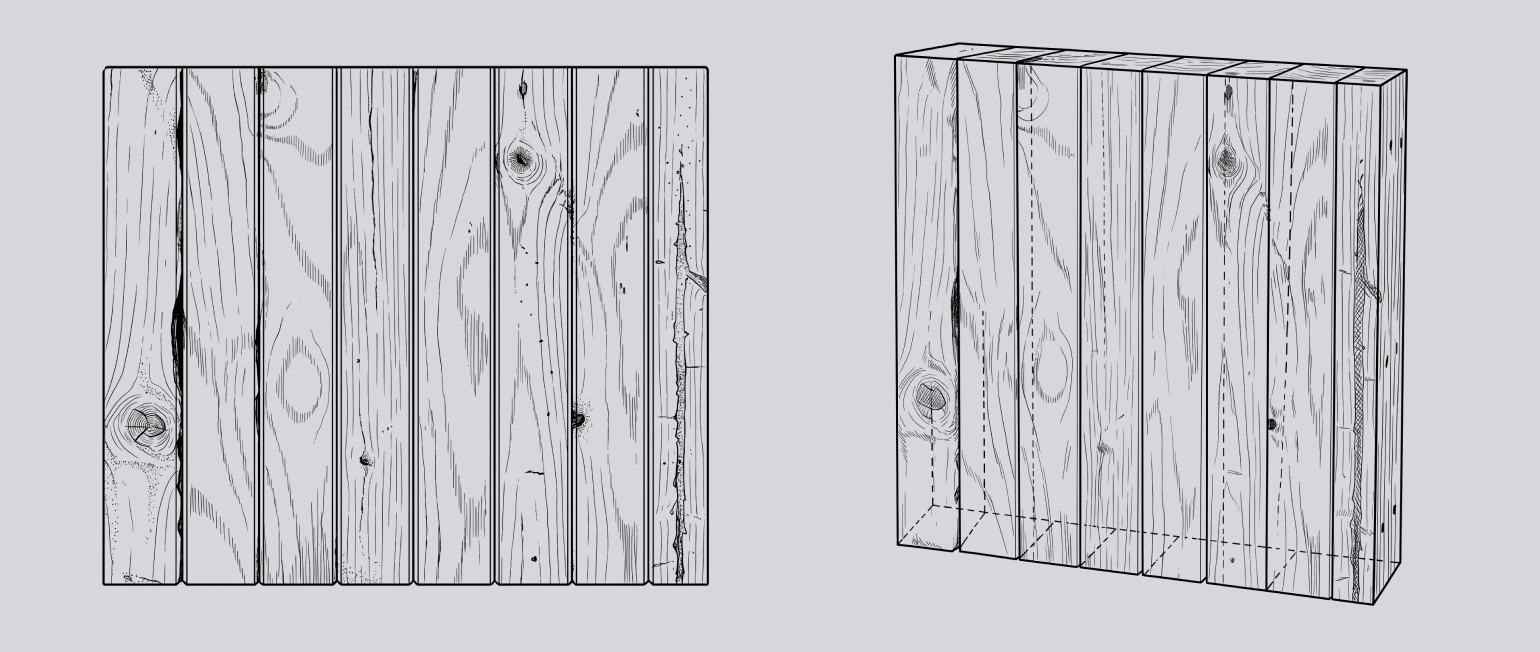
Parallel to glulam development, the team is actively exploring GripMetal's application in nail laminated timber. NLT presents a near-term opportunity to eliminate the need for finger-jointed boards entirely, allowing manufacturers to build panels to longer spans using standard mill output and local wood species, without adding a separate joining line or process step. The work underway represents the foundation of a verified, certifiable system that lets manufacturers do more with the fiber they already have.
How GripMetal™ enhances structural performance of lower grade lamstock in glulam beam testing
Utilizing GripMetal in the bottom two layers of lamstock concluded that replacing L1 lamstock with L2 lamstock provides you an increase in performance. The highest-performing configuration delivered 17.3% greater peak load capacity than the unreinforced control beam of equal dimensions.
Peak load capacity versus unreinforced control beam of equal dimensions (aluminum)
Reinforced beams using only L2/L3 lamstock outperformed the control with L1 lamstock
GripMetal uses aluminum reinforcement so beams remain fully cuttable on site.
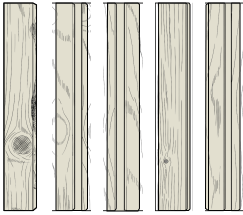
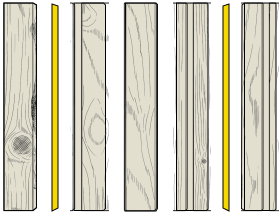
Testing configuration layouts

.svg)
.svg)
.svg)
Test results chart
4-point bending | 3400 mm c/c span | Loads 700 mm apart | Mid-span LVDT + 2× LVDTs @ ±300 mm
.svg)
Testing configuration layouts
Test results chart
4-point bending | 3400 mm c/c span | Loads 700 mm apart | Mid-span LVDT + 2× LVDTs @ ±300 mm
.png)
.png)
We are on a defined path from testing data to certified use.
GripMetal-reinforced glulam requires completion of several testing and certification milestones before it can be commercially specified and produced. Each stage is defined, costed, and sequenced.


.png)
Roadmap to certified use.
Initial structural testing
Most glulam operations purchase lamstock in mixed-grade bundles — typically 70 to 90 percent L2 and L3 material. Phase 1 results indicate GripMetal reinforcement at the tension lamination positions can bring L2 and L3 boards to L1 structural performance thresholds. A standard mixed-grade bundle serves a broader range of beam specifications. Forced high-grade mills sorts decrease. Per-beam material economics improve.
ICC-ES test planning in collaboration with the Forest Products Laboratory
The U.S. Forest Products Laboratory is engaged as a technical development partner. Their role: validate Phase 1 findings, review the ICC-ES pathway, and identify any technical considerations before formal certification begins.
ICC-ES acceptance criteria development
The ICC-ES process establishes the standardized testing protocol for GripMetal-reinforced glulam in North America. ICC-ES acceptance criteria for GripMetal creates the standard for the use of a mechanical face bond.
Moisture cycling testing
Structural assemblies must demonstrate bond stability through moisture exposure cycles — wood expands and contracts, and the lamination interface must hold. Moisture cycling testing submerges and dries the assembly repeatedly to validate long-term bond integrity.
Fire performance testing
Structural fire testing, conducted under load, is required before GripMetal-reinforced assemblies can be broadly specified in commercial construction.
APA layup certification
An APA-certified layup makes GripMetal-reinforced glulam a standard industry specification, available to any producer, spec’d by any engineer, without project-specific approvals. This final phase unlocks the commercial usage of reinforced glulam beams and opens the market for new glulam products
what is gripmetal
How GripMetal Works
What is GripMetal
Wood embedment
Composite benefits
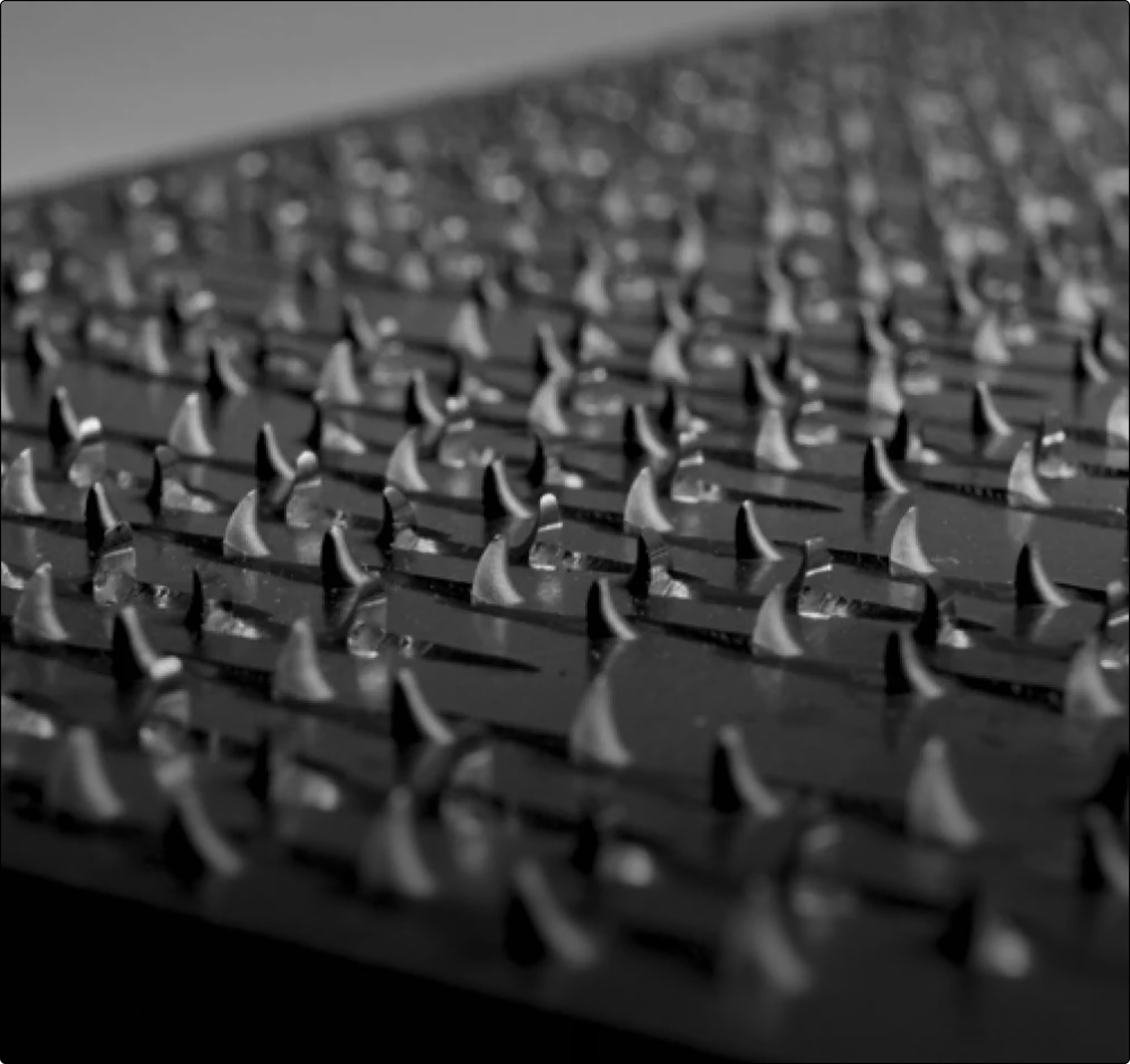
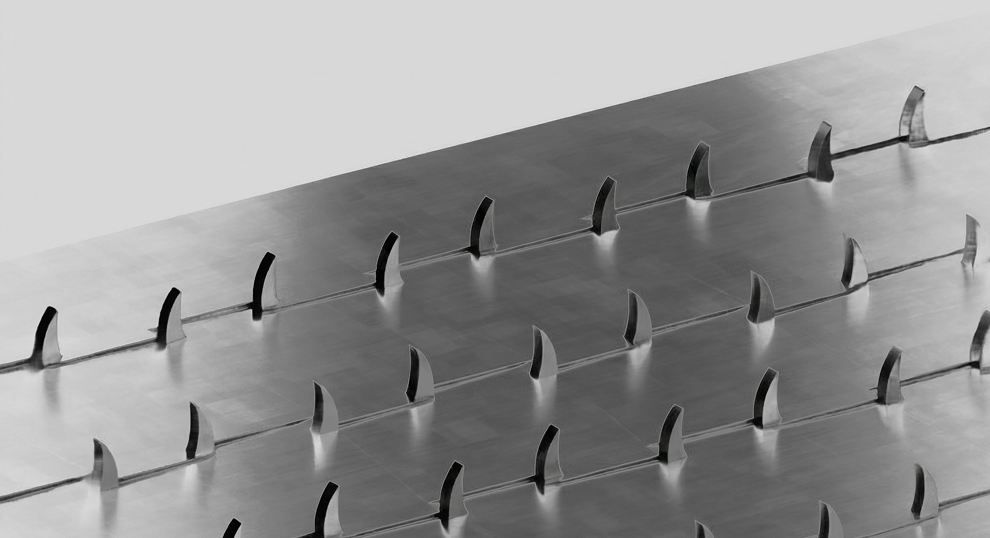
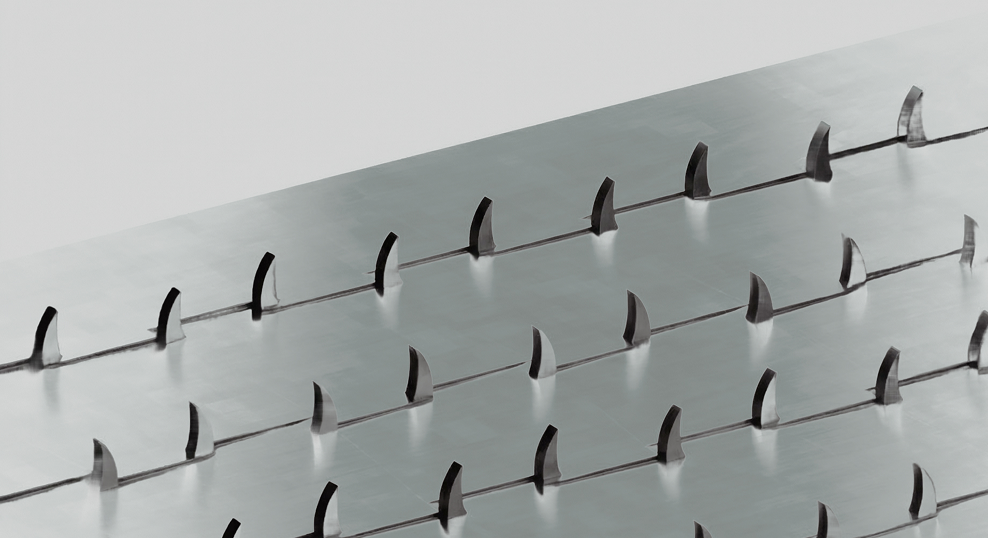
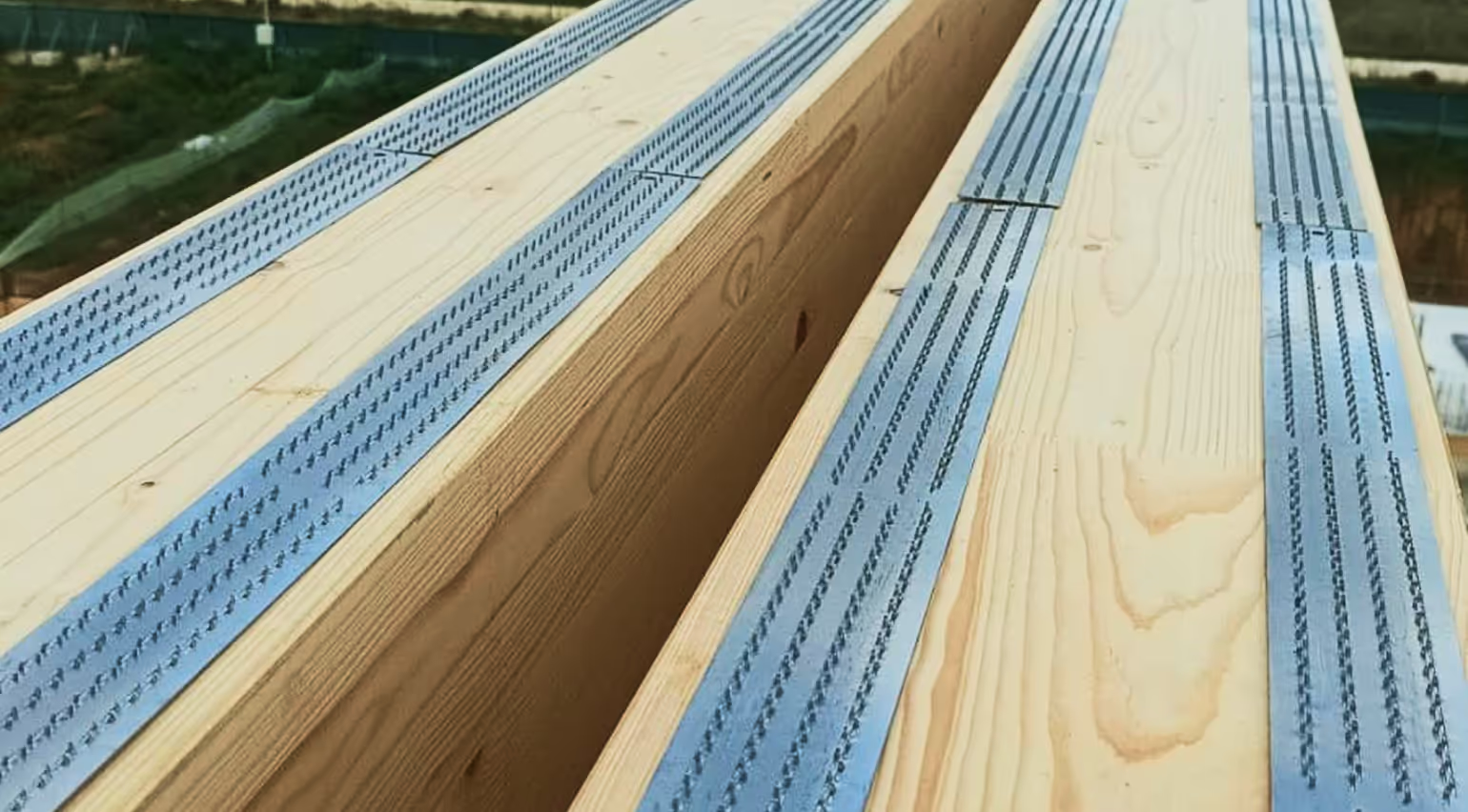
GripMetal is a thin sheet of metal with thousands of precision-formed hooks, single or double-sided.
%20(1).jpg)
When pressed, the hooks embed into wood fibers, creating a mechanical bond without the need of adhesives
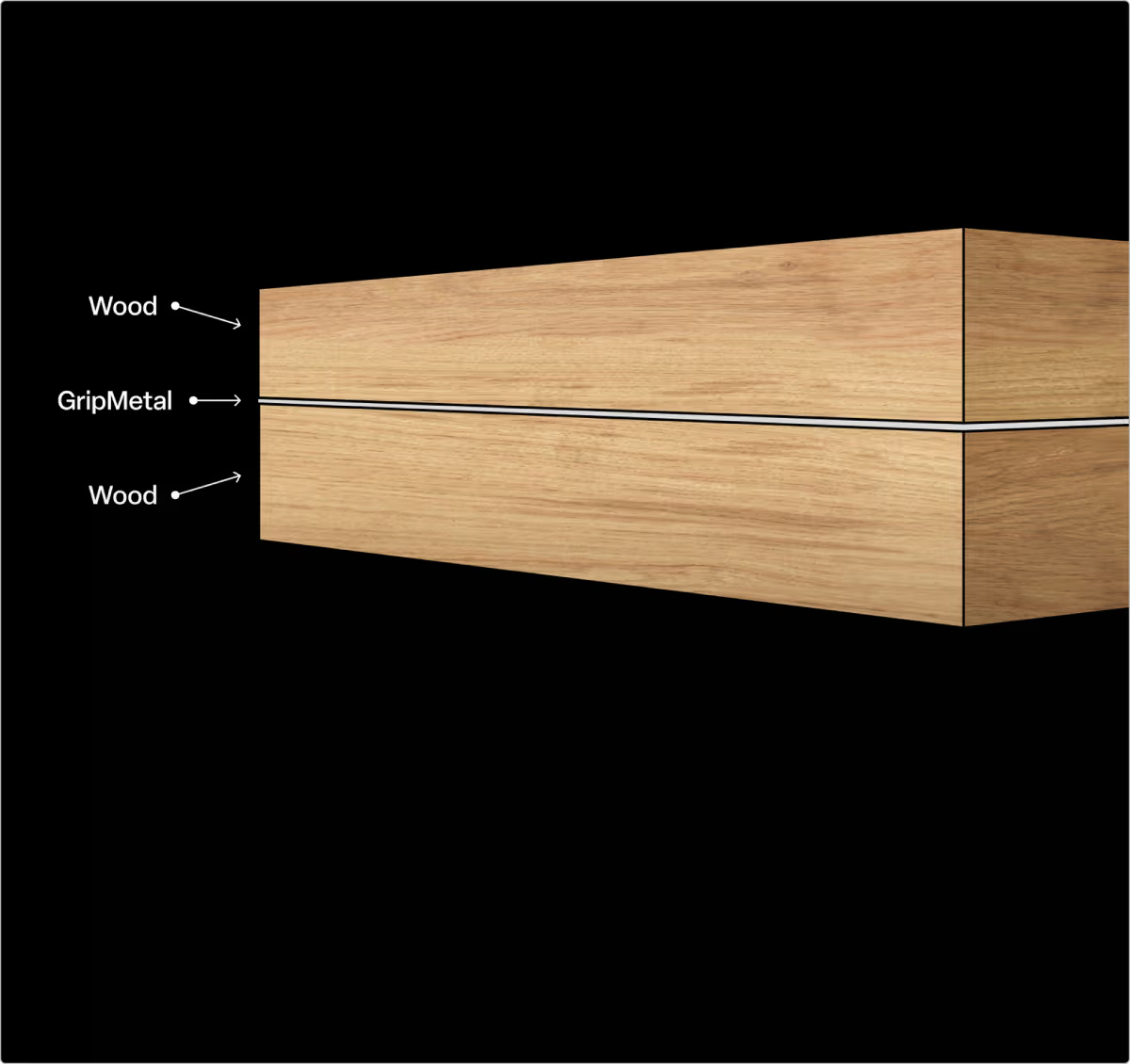
Forming a single composite material transferring the shear strength, tensile force, and ductility of metal to wood.

Explore how to implement GripMetal for your mass timber business
become a partneraddressing mass timber challenges
GripMetal can unlock new performance advantages for mass timber construction
Longer spans, improved fiber utilization
GripMetal strengthens composite action in bending, allowing beams and panels to span farther without increasing depth. Better stiffness. Fewer columns. More competitive mass timber buildings.
Access to Lower-Grade Fiber
GripMetal transfers tensile and shear capacity into mass timber components, allowing manufacturers to use species and grades previously unsuitable for structural applications.
Eliminate Cure Time
Unlike adhesive systems that require press and cure time, GripMetal creates an instant mechanical bond. Press it once. Move on.
Improved Ductility and Safety
GripMetal makes mass timber assemblies more ductile by preventing sudden, brittle separation between laminations. When timber fibers begin to crack or slip, the mechanically interlocked micro-hooks continue to engage. Instead of a brittle failure, the assembly maintains integrity longer and fails in a more controlled, ductile manner.
Fire Performance Maintained
Mass timber’s predictable char layer protects the embedded GripMetal surface, keeping it insulated from rapid temperature rise and preventing the premature failures associated with exposed metal connectors. Because GripMetal lies fully within the wood, it maintains mechanical interlock deeper into a fire event without introducing a heat-bridge from the surface.
No Adhesive Dependencies
Adhesive bondlines introduce variables; surface preparation, moisture, temperature swings, cure behavior, and long-term aging that can affect the consistency of shear transfer. GripMetal eliminates that dependency. Its mechanically embedded micro-hooks grip directly into the wood fibers, creating a stable, predictable shear-transfer interface that performs independently of environmental conditions.
addressing mass timber challenges
Research and development in GripMetal technology
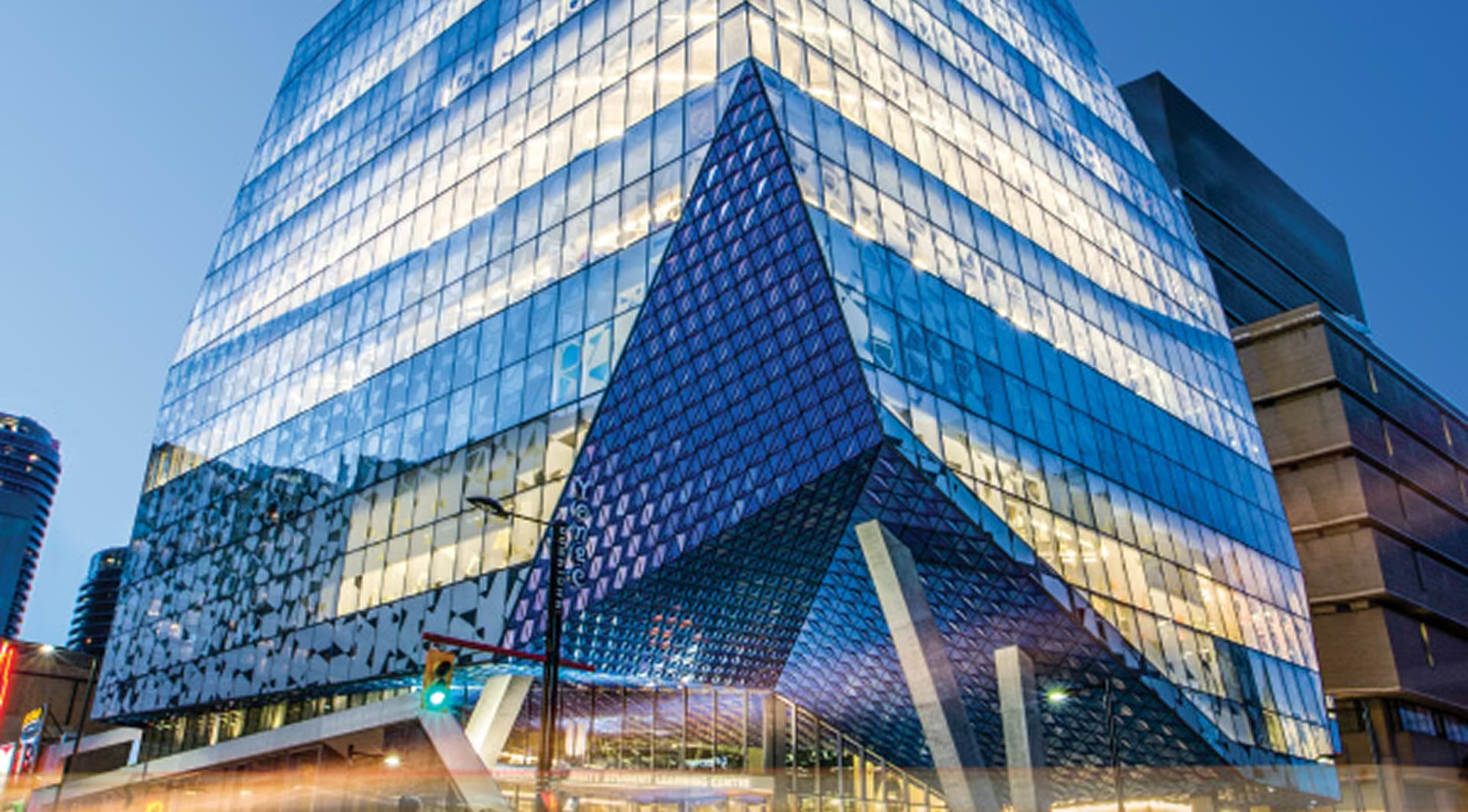

STRUCTURAL TEST
Full-scale beam testing, including joist reinforcement and hybrid panel configurations.
Research conducted by Dr. Hocine Siad from the University of Toronto.
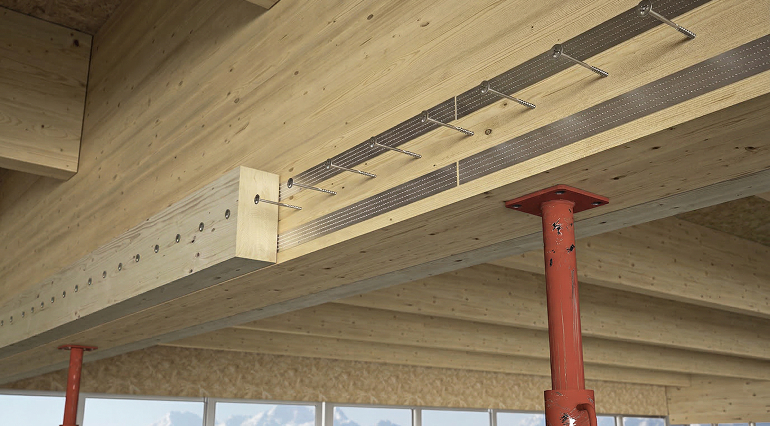

STRUCTURAL TEST
Five years of testing and ETA certification achieved in 2025 with Rothoblaas
Testing conducted in collaboration with Rothoblaas and ETA certification provided in 2025.
STRUCTURAL TEST
Launched and in-use commercially as Sharp Metal for mass timber connections.
Sharp Metal sold by Rothoblaas as a timber to timber connection product for mass timber construction.


STRUCTURAL TEST
CLT and NLT hybrid panel systems, low value grade wood product reinforcement.
Research being conducted by Zenon Radewych of WZMH Architects & Sparkbird.
In the press

Trusted and used in innovative products and applications












Frequently asked questions by AEC professionals
What about fire ratings?
We are working towards full scale fire testing. Our initial findings show promising data on fire performance, and potentially, enhancement.
Is there a certification pathway?
Yes. Rothoblaas achieved ETA certification in Europe under the brand name “Sharp Metal”. In North America, we are working towards the ICC-ESR process, supported by full-scale testing, manufacturing partners, and engineering validation. We are looking to partner with progressive engineers who can provide stamped designs for demonstration projects under the alternative means and methods provisions of the building code.
Does GripMetal work with existing production equipment?
Yes. GripMetal integrates with cold-press systems. No major capital investment required—just process refinement.
How does it affect CNC machining?
Aluminum GripMetal can be machined with standard tooling. We provide SOPs for safe handling.
What the cost compared to current methods?
Target pricing is competitive starting at $0.30 U.S. cents/sq ft. Exact cost depends on application and production volume.
.avif)
We are collaborating with manufacturers, engineers and design teams to validate use-cases and build the technical foundation for adoption in mass timber.
R&D Teams
Validate performance, access sample materials and testing support.
Structural Engineers
Specify GripMetal in mass timber demo projects. We'll support technical documentation and material supply.
Manufacturers
Integrate GripMetal into product trials. Test feasibility with your equipment and processes.
Mass Timber Advocates
Architects, engineers, manufacturers and researchers who want to explore what's possible.
.svg)
Explore opportunities with GripMetal
Schedule a meeting and learn about GripMetal
Request GripMetal product samples
Learn about manufacturing opportunities
Specify GripMetal on your next project
Tour our facility in Toronto and more
Request more information

Headquarters
3370 Pharmacy AvenueToronto ON Canada M1W 3K4

Contact info
(416) 627-4632
info@gripmetal.com